
Autumn Homeschooling Projects Using Homestead Materials
This post may contain affiliate links. Read our disclosure policy.

Autumn on the homestead offers rich hands‑on learning opportunities. Crisp air, falling leaves, and a busy harvest season are an invitation to slow down, explore, and learn through curiosity.

During the fall, it’s easy to weave core math and science skills into everyday homestead tasks. As a homeschooler or someone who is further pursuing your children’s education at home, you can take advantage of these opportunities!
Today I’m going to share some simple ideas with you on how you can integrate homeschooling into your autumn homesteading life.

Why Curiosity-Based Learning is Important
Do you remember your favorite day of school when you were growing up? Was is the one where you worked all day on worksheets and memorization? Of course not! It was the field trips, the hands-on experiences, and the love based learning days that are firmly cemented in our minds.
You can’t underestimate the value of open‑ended, observation‑driven activities for all ages of leaners. This is where kids are able to explore, measure, and experiment without rigid worksheets and testing.
And a curriculum for this type of learning? It doesn’t exist. All you need are notebooks or printable recording sheets to jot down measurements, predictions, and discoveries. My children’s favorite “school books” are the fun notebooks and sketch books that they pick out!
Not sure how to get started with this type of learning? Here are some specific suggestions on ways to encourage curiosity-based education on your homestead with your children or grandchildren.

Leaf Detective
- Materials: clipboards, magnifying glasses, journal, assorted leaves.
- Activity: Take a nature walk to collect leaves; examine colors, veins, and shapes under magnification.
- Math connections: Sort leaves by size or number of lobes; graph how many of each type you found.
- Build a discussion: Think of questions that will help your children really expand on what they are looking at. ie: “Which trees did these come from?”
- Art Idea: Paint one side of the leaves and press them onto paper like a stamp. Use these leaf pressing to make cards, wrapping paper, or decor.

Weighing Pumpkins or Winter Squash
- Materials: a few pumpkins/gourds/winter squash from the garden of varying sizes, yarn, scale.
- Activity: Predict and record each pumpkin’s weight, measure the circumference with yarn and line them up from smallest to largest. (great activity for littler ones that are learning big and little!)
- Math connections: Compare predictions to actual weights, calculate circumference and diameter, chart results.
- Build a discussion: Talk about growing the squash and see if the kids can come up with new ideas on how to grow them bigger or better next year. Write down any ideas and try them out the following year.
- Bonus Idea: Roast seeds and talk about making healthy snacks. Full instructions on Roasted Pumpkin Seeds here.

Seed‑Counting & Sprouting Math
- Materials: dry beans or grains from your pantry (corn, wheat, peas), jars, cotton balls or soil.
- Activity: Estimate the number of seeds in a scoop, then count by grouping into tens or twenties. Create bar graphs of seed counts by type.
- Science connections: Soak seeds and observe germination; record growth measurements daily and calculate growth rate. (If it’s something you can plant, you might want to do this part in the spring.)
- Build a discussion: Connect to homestead seed‑saving practices and discuss why drying seeds at proper temperatures and environments is important.
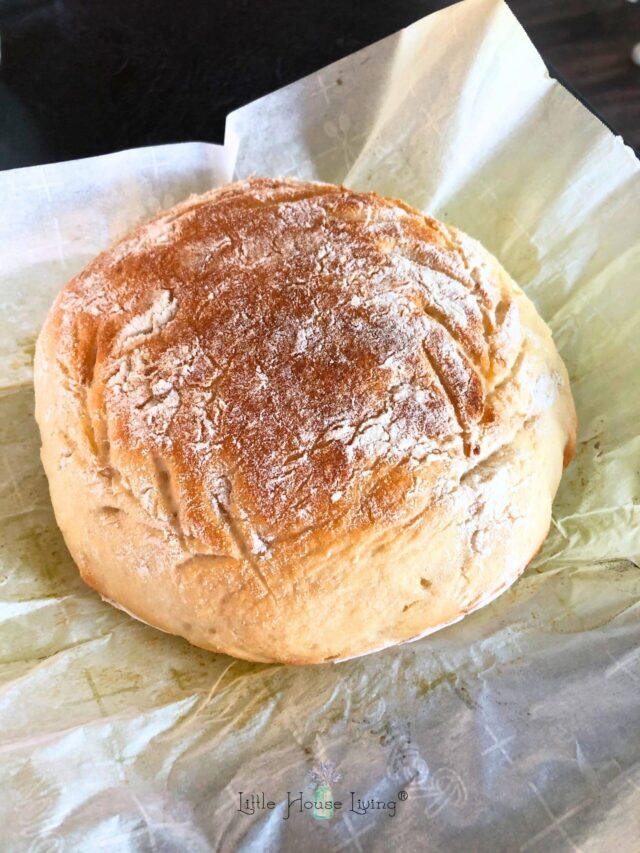
Homestead Kitchen Chemistry
- Materials: sourdough starter or yeast, flour, water, jars, thermometer.
- Activity: Make sourdough bread.
- Math skills: Measure ingredients in cups and grams, calculate doubling/halving recipes.
- Science lesson: Compare bread dough rise at different temperatures; discuss yeast as a living organism and chart rising times.
- Bonus idea: Make simple homemade cheese or yogurt; track pH changes and discuss fermentation.

Weather & Solar Tracking
- Materials: notebook, ruler, compass or stick, thermometer.
- Activity: Chart sunrise/sunset times, temperature and cloud cover for a week. Use a stick in the yard as a sundial to track shadow lengths and angles at different times of day.
- Math connections: Create line graphs of temperature changes, calculate average daylight decrease per day.
- Science connection: Discuss Earth’s tilt and how it creates seasons.
- Build a discussion: Talk about how things change with each season on the homestead and why all are important.

Nature’s Painting Projects
- Materials: berries, turmeric, coffee grounds, vinegar, water, brushes, watercolor paper or fabric.
- Activity: Crush natural materials to create pigments; observe how colors mix and change when exposed to air and sunlight. Experiment in color mixing. Use your homemade pigments to make artwork.
- Science connection: Explain why certain pigments fade (oxidation) and experiment with acid or base (vinegar vs. baking soda) to change colors.
- Build a discussion: Talk about color mixing, natural resources, and how we can create our own DIY products with free things.

Nature Stories
- Materials: Acorns, seeds, leaves, anything really!
- Activity: Collect acorns, pinecones or feathers and encourage children to imagine where each item came from and either write or dictate short stories.
- Science connections: Discuss plant life cycles and ecosystems to tie back to science.
- Math connections: Create sequencing cards or timelines based on story events. You could also sort and count items that they’ve collected.
- Build a discussion: Create the story together! Have each child bring several items to the table (and you too!), and everyone can use each item to add to a group story.

The autumn season gives us so many opportunities to create and explore naturally. I hope that this article gives you some ideas on how to foster creative learning with your children and grandchildren, simply using the world around you and the projects you are already working on.
Many of these activities could be done as a homeschool coop as well or done individually with the results discussed at a homeschool coop if you want to get a group involved!

Merissa Alink
Merissa has been blogging about and living the simple and frugal life on Little House Living since 2009 and has internationally published 2 books on the topic. You can read about Merissa’s journey from penniless to freedom on the About Page. You can send her a message any time from the Contact Page.
This blog post on Autumn Math and Science Homesteading Homeschooling Projects was originally posted on Little House Living in October 2025.
These are all great activities and are great introductions to deeper studies!
This blog post is awesome! Some of these things I want to research for myself haha…. I feel like the public school failed to instill in me wonder for the natural world, so I’m playing catch up as I raise my babies.